Skip to main content / Μετάβαση στο κύριο περιεχόμενο
UPGreek Tourism

A citizen campaign · Greece · 2009–2013

UPGreek Tourism

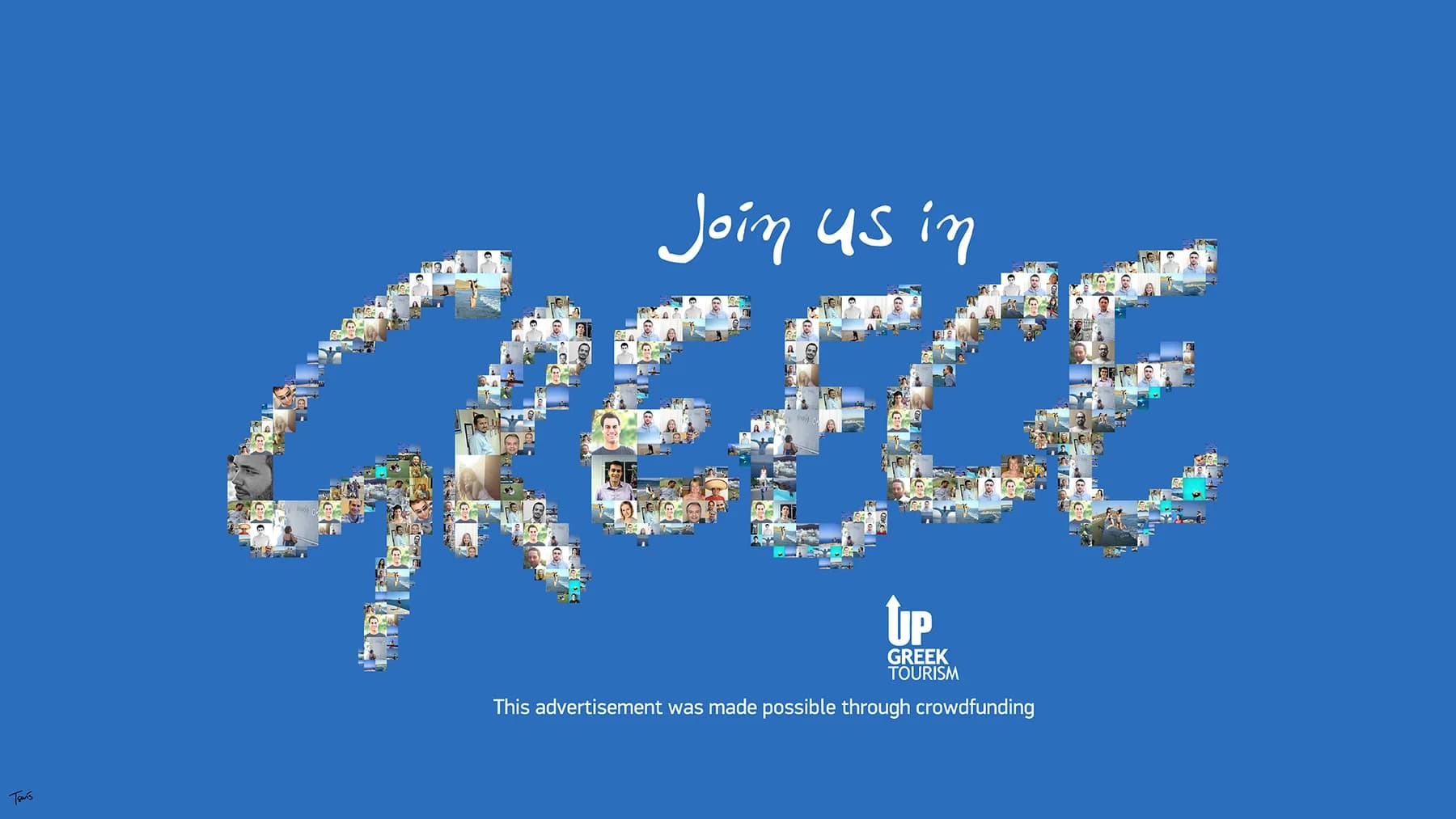
Join us in Greece.

During the Greek financial crisis, Yorgos Kleivokiotis—then living in Dubai—believed tourism could be one way forward. He called two friends, Onic Palandjian and Stathis Haikalis. Hundreds of people helped turn their idea into a global message.

This site rebuilds the story from the archived campaign pages, original artwork, films, photographs, and contemporary reporting.

Join us in Greece2012
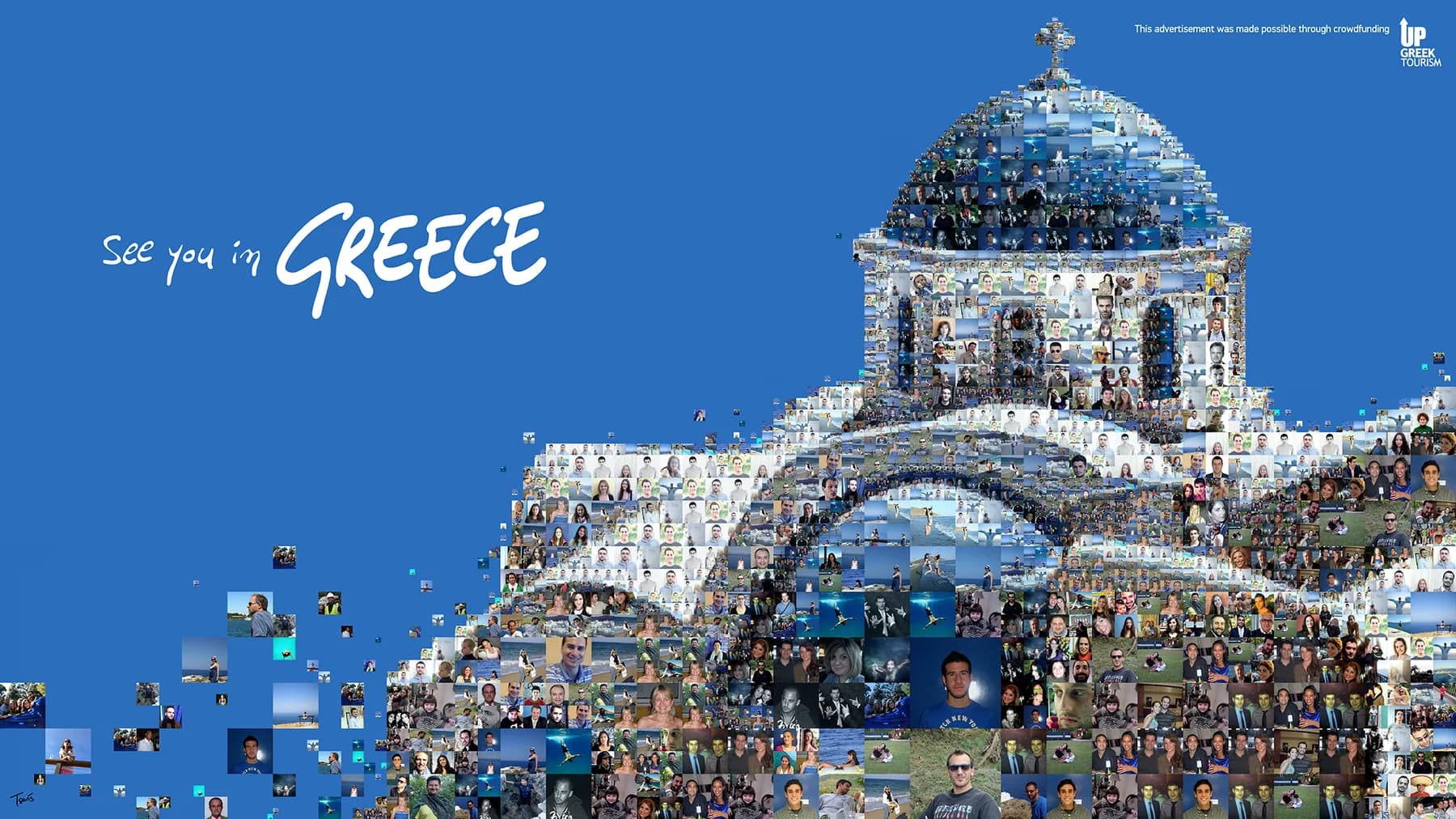
Santorini church dome mosaic composed from campaign photographs
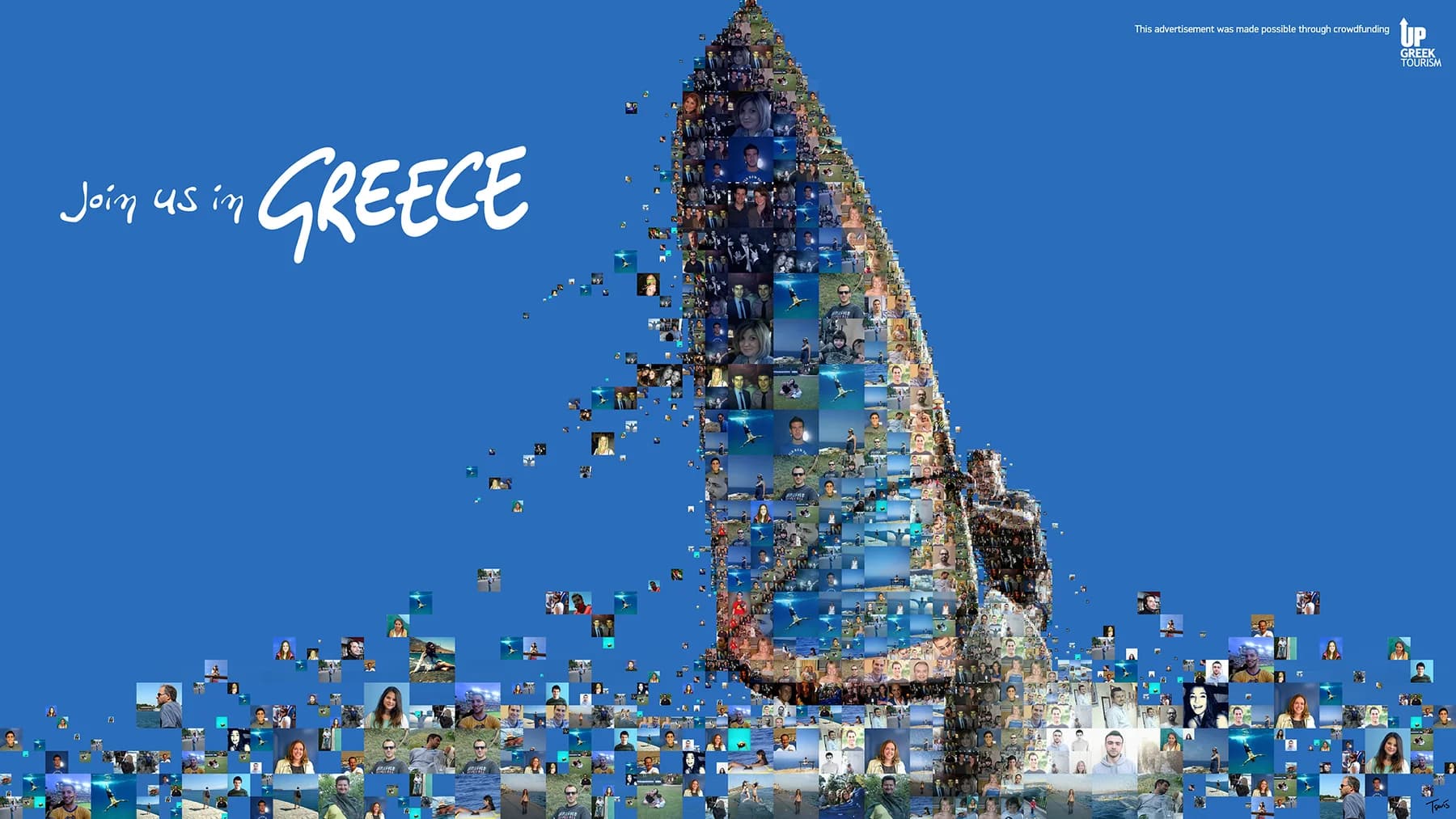
Santorini, one of six campaign mosaics. Art direction and design by Charis Tsevis.

$20,352

raised for Times Square, as The New York Times printed it

333

people in that same count

20

days to pass a $15,000 goal

3

cities where a board actually went up

TEDxAthens · Yorgos Kleivokiotis

The future of our country is in our hands.

Yorgos tells the story himself: from a Facebook invitation that reached 175,000 people, to the idea of crowdfunding an outdoor campaign, to 333 people putting Greece in Times Square.

Recorded at TEDxAthens. Greek audio with English subtitles, published by TEDx Talks.

TEDxKalamata · Onic Palandjian · 2013

A simple idea—UP Greek Tourism.

Onic gives a second founder’s account of the campaign and the belief behind it: ordinary people could stop waiting, work together, and create something positive for Greece.

Watch on YouTube

The story · 2009–2013

One idea in Dubai became a campaign made by hundreds of people.

UP Greek Tourism was a volunteer campaign created during the Greek financial crisis. Its purpose was simple: remind the world that Greece was still beautiful, safe, and ready to welcome visitors.

What

A citizen-led campaign for Greek tourism.

Why

Tourism could bring income and confidence during the crisis.

How

Crowdfunding, donated work, social media, and outdoor screens.

Where

New York, Washington, and London.

Why it began

The headlines showed a country in crisis. Yorgos saw tourism as a way forward.

Greece’s debt crisis was dominating international news. Images of austerity, demonstrations, and political uncertainty were shaping how the country was seen abroad—and were hurting bookings. In June 2012, the BBC reported a 15.1 percent fall in tourism receipts and a sharp drop in arrivals from Germany.

Yorgos Kleivokiotis was living in Dubai. He believed tourism—what he called Greece’s “heavy industry”—was one practical route out of the crisis. Visitors brought money directly into hotels, restaurants, ferries, shops, and local communities. Greece did not only need sympathy; it needed people to come.

He reached out to two friends, Onic Palandjian and Stathis Haikalis. Together they began asking what ordinary citizens could do without waiting for a government campaign.

While our government is trying to deal with the economic crisis, we, as individuals, should not wait.

Onic Palandjian · Times Square announcement · 2012

How an idea became a campaign

A Facebook invitation became a volunteer network, then a crowdfunded billboard.

  1. 01

    Invite

    The early “Save Greece: Travel to Greece this Summer” Facebook event reached roughly 175,000 people. Contemporary accounts put the total between 170,000 and 180,000; either way, it proved that a positive message could travel.

  2. 02

    Gather

    Yorgos, Onic, and Stathis brought together volunteers across countries—people with day jobs contributing strategy, design, film, technology, media, and local contacts.

  3. 03

    Fund

    The team used Loudsauce to ask the public for $15,000. The money would pay for media space; it would not pass through the volunteers.

  4. 04

    Amplify

    A billboard was a physical event people could photograph and share. The outdoor placement created news, and the news carried the message much further.

Twenty days

333 people put Greece in Times Square.

The New York fund opened on February 12, 2012. Twenty days later, it closed above its target: $20,352 from 333 contributors in Greece and around the world. A Greek American billboard owner made a Times Square screen affordable by offering it at a steep discount.

On March 23, the campaign appeared at 1560 Broadway, between 46th and 47th Streets. It ran for thirty days. The message was short enough to cross a crowded square: “Join Us in Greece.”
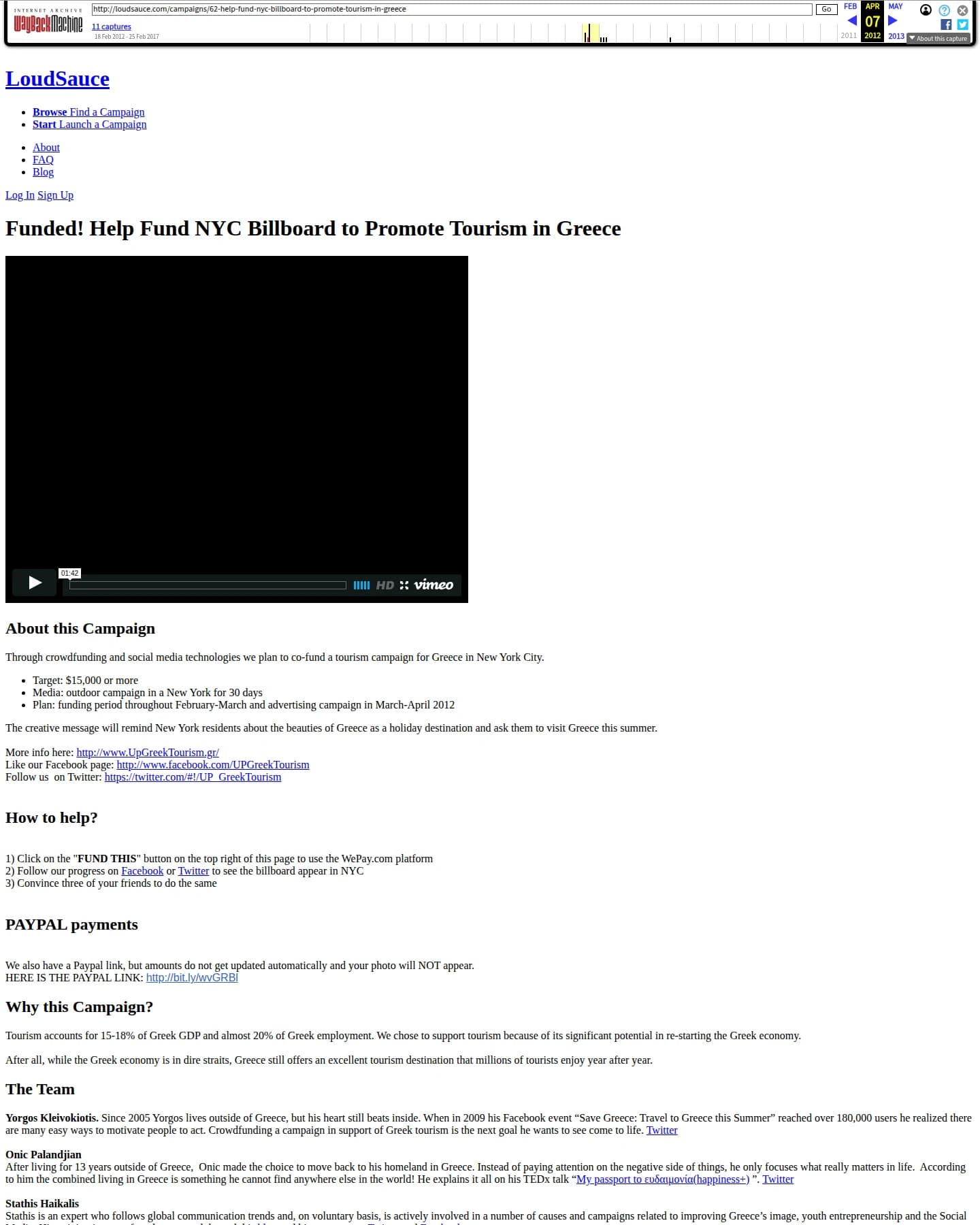
Archived UP Greek Tourism Loudsauce page showing the completed New York crowdfunding campaign
The completed Loudsauce campaign, preserved by the Internet Archive. The original page still holds the pitch, team list, contributor avatars, and final result.

“We raised $20,352 from 333 people. Thank you!”

Who made it possible

The campaign was designed to look like the people behind it.

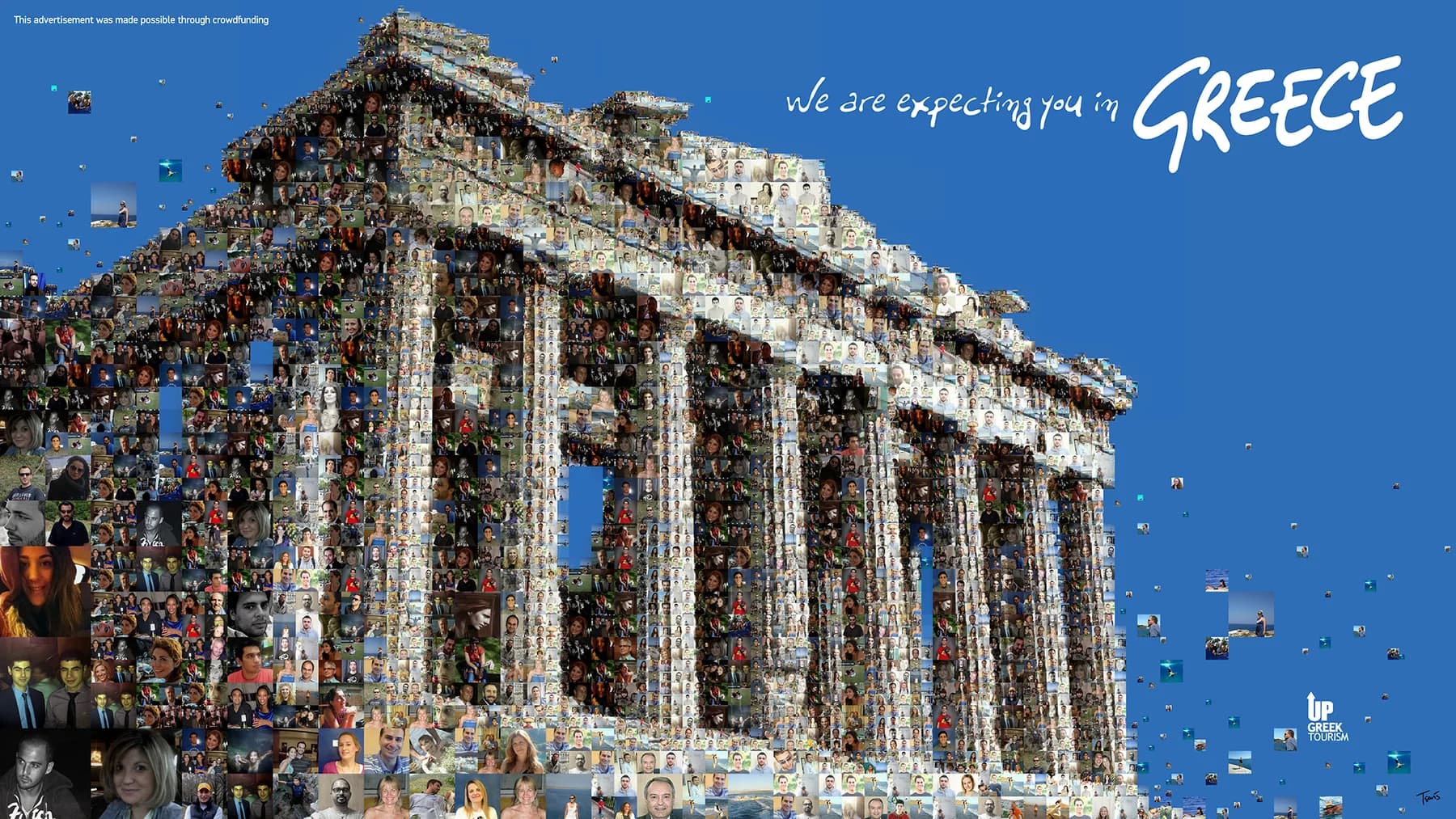
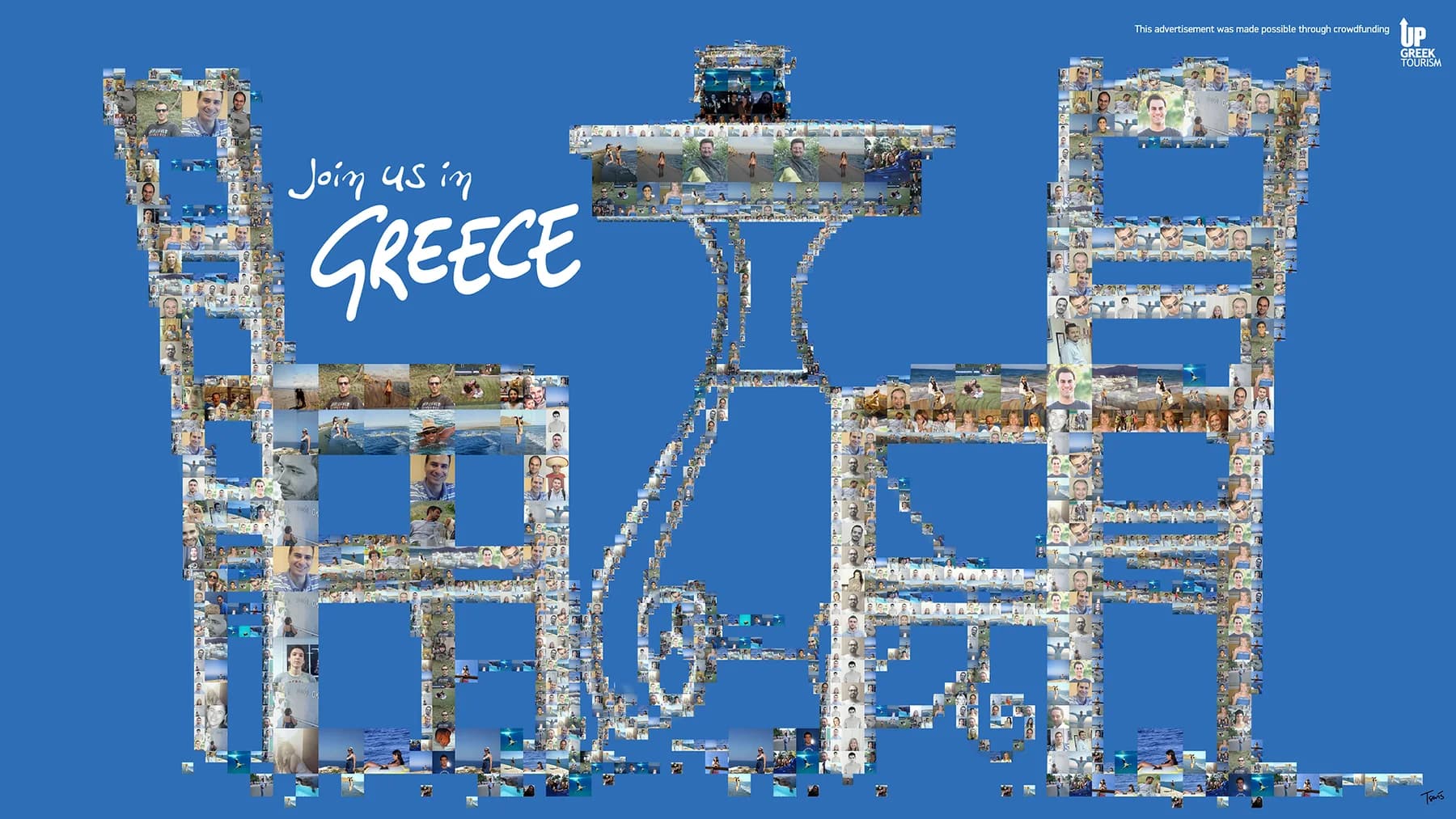
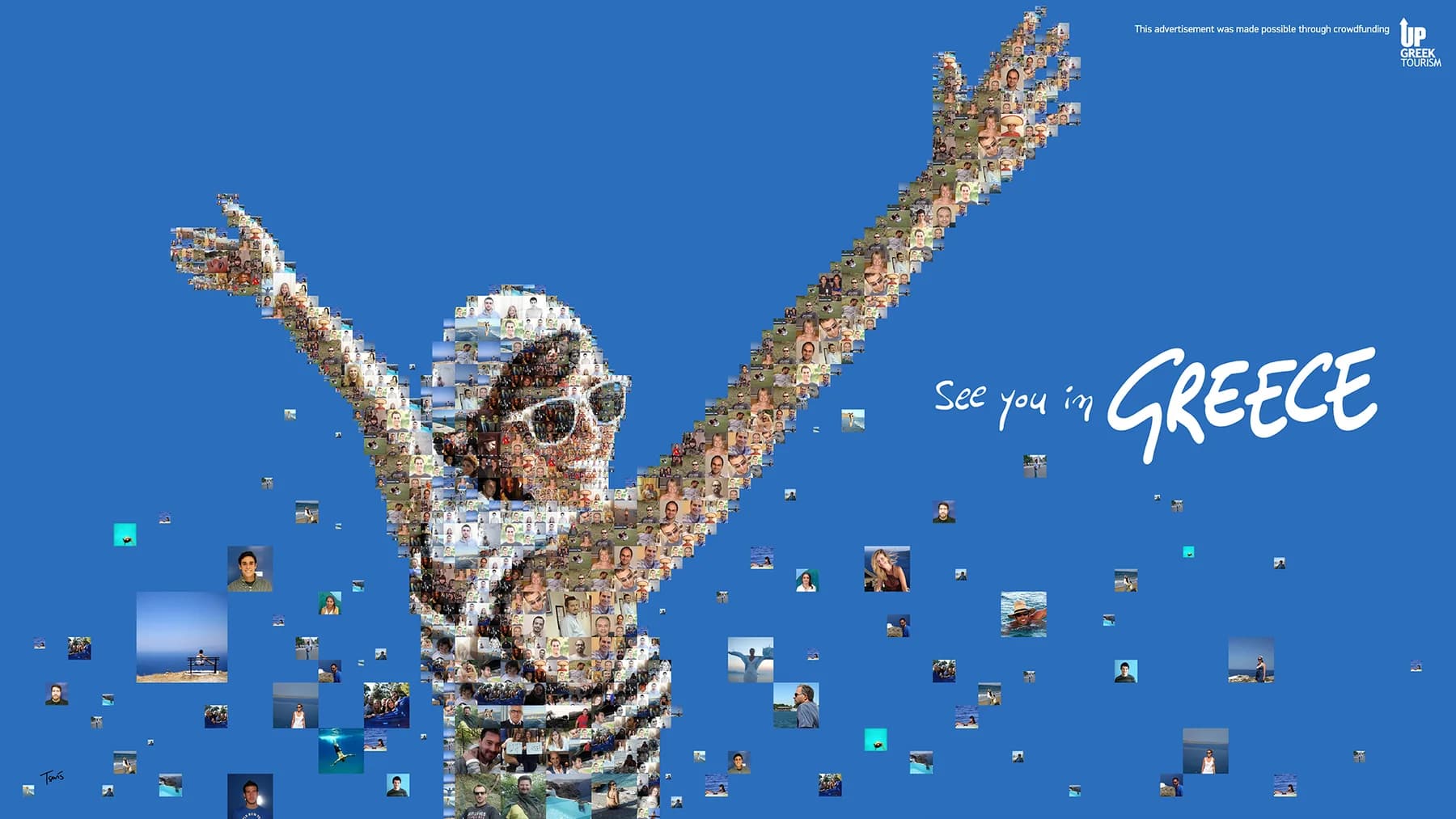
Charis Tsevis created the campaign’s visual identity pro bono. His mosaics—Santorini, the Parthenon, a windsurfer, a Cycladic café, a joyful girl, and the word Greece—were assembled from hundreds of photographs. Many came from amateur Greek photographers and campaign supporters.

Despo Potamou and Tsevis animated the work. Ted Reglis provided music. Kimon Tsakiris worked on film; Dimitris Maniatis and Dimitris Zotos on the website. Art Dimopoulos helped take the campaign to Washington, Katerina Spetsiou led London, and AHEPA and the American Hellenic Institute supported the Washington placement. Many more volunteers handled communications, translation, fundraising, press, production, and local logistics.

Our team is made of people with day jobs, working on this project in their spare time.

Yorgos Kleivokiotis · Times Square announcement · 2012

The original site published the wider volunteer list. Read the archived team page ↗

March 23 – April 22, 2012

New York

The crowdfunded beginning: a digital screen in Times Square for thirty days.

May 3 – June 3, 2012

Washington

A Santorini dome, wallscapes, a Metro placement, and bus shelters on 7th Street.

January 31 / February 1 – February 14, 2013

London

About 200 citizens raised £12,000 for two weeks in Piccadilly Circus. Kathimerini reported a January 31 opening; the campaign page had planned February 1.

What happened next

The placements ended. The story kept travelling.

Newspapers, television, radio, and social media carried the campaign beyond the people who could see the screens in person. CNN reported on New York in April 2012. In February 2013, Christiane Amanpour showed the London campaign and described it as “a grassroots effort to revive Greece’s economic engine, which is tourism.”

UP Greek Tourism did not claim to solve the crisis. It showed something smaller and more repeatable: citizens could offer time, craft, contacts, photographs, or a contribution, and together make a country-sized message visible.

This is a grassroots campaign, for the Greek people, by the Greek people.
upgreektourism.gr · February 2013

Three boards that went up

The screen, and what was actually on it.

The original mosaics and placement photography, reproduced with permission and credited to their art director, Charis Tsevis.

1560 Broadway · March 23 – April 22, 2012

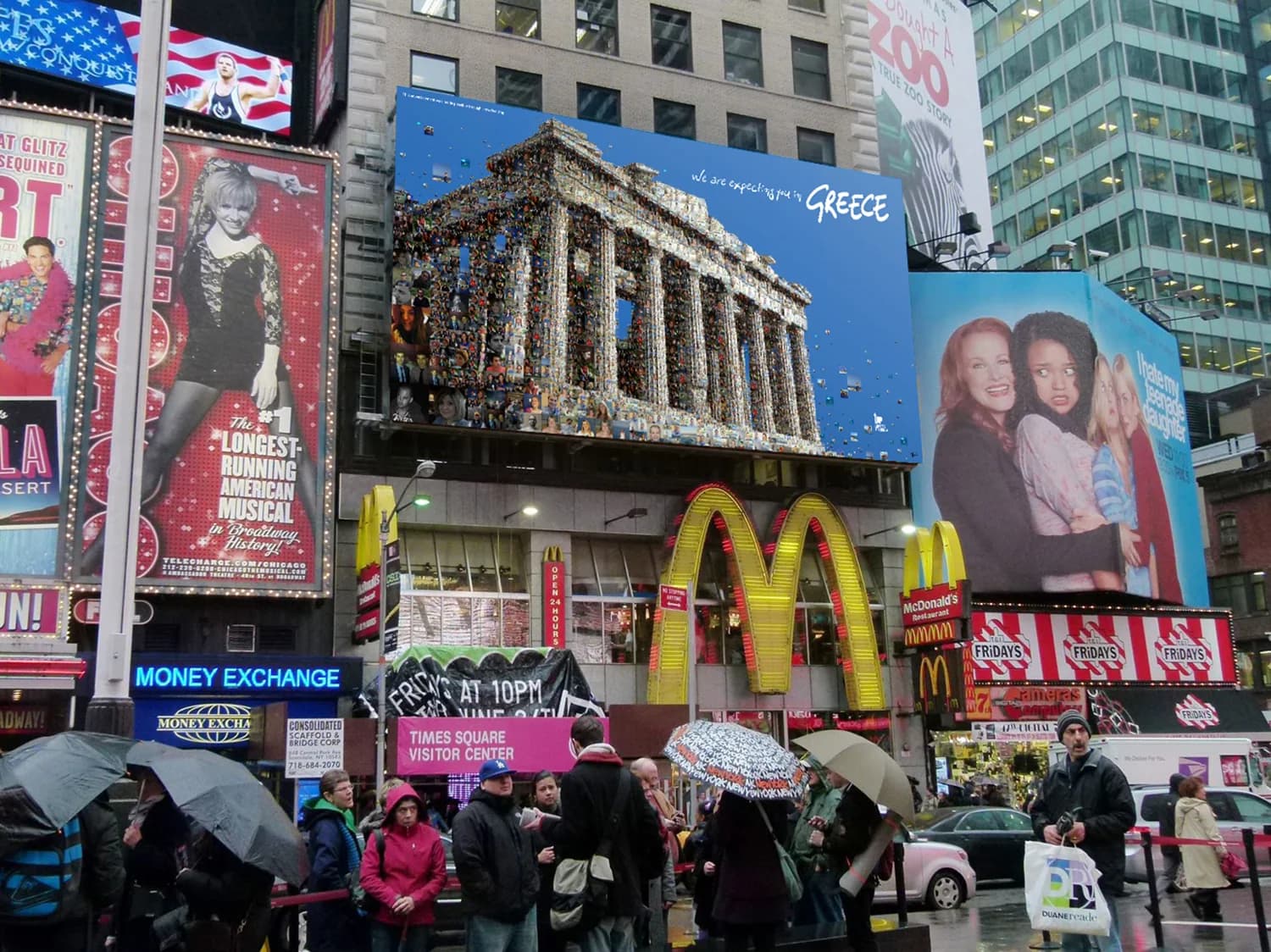
  • A digital board between 46th and 47th Streets. The site dated it March 23 to April 22. The New York Times dated the start to that Friday, for 30 days.
  • Reports describe different frames of an animated board: the Acropolis, two wooden chairs and a cafe table, turquoise water. Tsevis had built several mosaics, and two animations.
  • A Greek American who owned the board offered it at a steep discount. Kleivokiotis told Mashable he had not known Times Square was in reach.
1560 BroadwayMarch 23 – April 22, 2012
The Parthenon mosaic on the UP Greek Tourism screen in Times Square
The Parthenon mosaic on the UP Greek Tourism screen in Times Square. Art direction and design by Charis Tsevis.

The six mosaics

Greece, built from the people behind it.

Tsevis made six campaign images: a windsurfer, Santorini, the Parthenon, a Cycladic table and chairs, a happy girl, and Greece itself. Mashable reported that roughly 400 supporter photographs went into the Times Square poster.

Windsurfer mosaic made from hundreds of small photographs
Santorini dome mosaic made from hundreds of small photographs
Parthenon mosaic made from hundreds of small photographs
Two Cycladic chairs and a table made from hundreds of small photographs
A happy girl jumping, made from hundreds of small photographs
The word Greece formed from hundreds of campaign photographs

Art direction and design: Charis Tsevis. Animation: Despo Potamou and Charis Tsevis. Photography: Ricardo Miguel, Paul Cowan, Krisztina Farkas, C. Cheah, .shock, and hundreds of amateur Greek photographers.

Watch the record

The campaign, in its own images and voices.

The pitches, films, and television clips survived even after the original website disappeared. These are four moments from the campaign’s own channel.

All films and coverage
The original crowdfunding pitchThe New York ask · February 2012
Join Us in GreeceThe campaign film · 2012
The London campaignThe Piccadilly Circus pitch · 2012
London on AmanpourCNN · February 21, 2013

The story travelled

Covered around the world—and across Greece.

The placements were only part of the campaign. International and Greek media carried the story far beyond the streets where the billboards appeared. Every mark below links to the surviving report or its archived record.

Greek media

The campaign at home

Browse the complete press archive

Pennies from many

333 people. The Times printed the count. It did not print a ledger.

Each dot is one donor in the New York Times figure of 333. About half the support came from Greece and half from abroad, so the first 167 dots are marked for Greece and the rest for everywhere else. Choosing a country does not reveal a total. No outlet published one.

The campaign named sixteen countries besides Greece. Friends of Greece were in the count along with Greeks and people of Greek ancestry.

Greece, about half Abroad, about half

Founders, makers, and city leads

The people who turned the idea into something real.

These are some of the people whose roles survive in the public record. The 2012 team page named a wider circle—Art Dimopoulos in Washington, Kimon Tsakiris on film, Dimitris Maniatis and Dimitris Zotos on the site, Katia Mouzaki, Maria Katsikovordou, George Petrocheilos, Jim Stoucker, and others. The campaign depended on all of them.

  • Co-founder

    Yorgos Kleivokiotis

    From Dubai, saw tourism as one way through the crisis and called Onic Palandjian and Stathis Haikalis for help.

  • Co-founder

    Onic Palandjian

    In Athens in 2012. The public voice of “do not wait.”

  • Co-founder

    Stathis Haikalis

    Named with the other two from the first reports, and a LiFO byline as the New York month started.

  • Art direction, pro bono

    Charis Tsevis

    The mosaics, the animations, and the campaign typeface PF Libera Pro.

  • City leads

    Art Dimopoulos and Katerina Spetsiou

    Washington in 2012, London in 2013.

If each of us tries to do something small for our country, then a lot can be achieved.

Onic Palandjian · BBC News · 2012

Were you part of the campaign, or do you have something that belongs in this archive? We would like to hear from you.